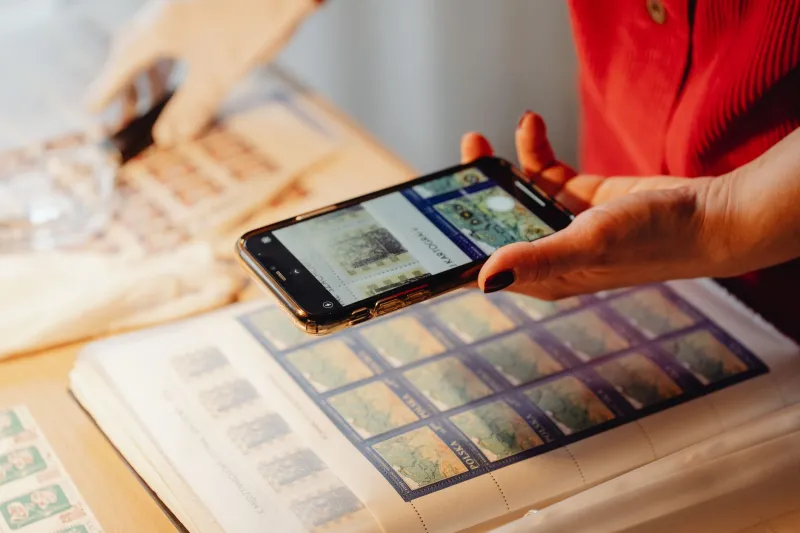
Drowning in Memories: What Your 50,000-Photo Library Is Actually Doing to Your Brain

You open your phone's camera roll on a lazy Sunday afternoon, fully intending to relive that amazing road trip you took last summer. Twenty minutes later, you've scrolled past 3,000 random screenshots, blurry duplicates, and seventeen nearly identical shots of the same sunset — and you still haven't found what you were looking for. Sound familiar?
For millions of Americans, this is the new normal. Cloud storage has made it laughably easy to keep every single photo we ever take, and we've taken full advantage. The average smartphone user in the US now accumulates tens of thousands of images over a few years, and platforms designed for uploading and storing photos have made it cheaper than ever to hold onto all of them. But here's the uncomfortable question nobody's really asking: is saving everything actually helping us remember anything?
The short answer, according to a growing body of research, is probably not.
The Science Behind the Scroll
Psychologists have a term for what happens when we outsource our memories to our devices: cognitive offloading. The basic idea is that when we know a piece of information is stored somewhere accessible — like a photo on our phone — our brain deprioritizes encoding that memory deeply. We've essentially handed the job to our camera.
A landmark study by Dr. Linda Henkel at Fairfield University found that participants who photographed objects in a museum remembered significantly fewer details about them than people who simply observed without snapping a picture. The act of taking the photo created what she called a "photo-taking impairment effect." We point, shoot, and mentally move on — trusting the image to do the remembering for us.
Now scale that up to 50,000 photos. If every moment is captured, is any moment truly experienced?
When Abundance Becomes the Enemy
There's also the very real problem of decision paralysis. Psychologist Barry Schwartz wrote extensively about this in The Paradox of Choice — the idea that more options don't make us happier, they make us anxious and indecisive. Your photo library is a perfect real-world example.
When you have 47 photos from your kid's birthday party, choosing the one that captures the magic of the day becomes an exhausting task. So you don't choose. You keep all 47. The meaningful moment gets buried under its own documentation, and you never actually sit down to revisit it in any meaningful way.
This is the cruel irony of the photo hoarding mentality: we save everything because we're afraid of losing memories, but the sheer volume of what we've saved makes those memories harder — not easier — to access.
The Organizational Nightmare Nobody Talks About
Let's get practical for a second. A library of 50,000 images isn't just a psychological burden — it's a logistical one. Even on the best photo platforms, finding a specific image from three years ago requires either meticulous organization (which most of us haven't done) or a lot of hopeful scrolling.
And what about sharing? If you want to put together a photo album for a grandparent's birthday or share a curated set of vacation highlights with friends, wading through thousands of near-identical images to find the gems is a project that often just... doesn't happen. The photos sit there, technically preserved but practically invisible.
Platforms like PictureUpload are designed to make sharing fast and intuitive — but even the slickest upload-and-share tools can't compensate for a collection that's fundamentally unmanageable.
What Intentional Curation Actually Looks Like
Here's the good news: you don't have to delete your entire library and start over. Intentional curation is less about minimalism and more about being deliberate. Here are some strategies that actually work.
Apply the "best three" rule. After any event or outing, challenge yourself to pick the three photos that genuinely capture the experience. Keep the rest in a secondary archive folder if you can't bring yourself to delete them — but make those three your go-to memories.
Schedule regular editing sessions. Set aside 20 minutes once a month to go through recent uploads. Delete the obvious duds: blurry shots, accidental captures, the seventeen near-identical versions of the same scene. Doing it in small batches keeps it from becoming overwhelming.
Create shareable albums with purpose. Instead of dumping 200 vacation photos into a shared folder, build a tight album of 20-30 images that tell the actual story. When you share that curated set with family or friends, it's something people will actually look at — and something you'll revisit yourself.
Use your storage platform's organizational tools. Most cloud-based photo services offer tagging, album creation, and date-based organization. Actually use them. A library you can navigate is infinitely more valuable than one you can't.
Rethinking the 'Keep Everything' Mindset
Cloud storage deserves some credit here — and some blame. The ability to upload and store unlimited photos is genuinely wonderful. It means we're no longer forced to delete images just to free up space, and it gives us a safety net against the heartbreak of losing irreplaceable pictures to a broken hard drive or a stolen phone.
But somewhere along the way, "never lose a photo" became "never delete a photo," and those are very different things. The first is about protecting what matters. The second is about avoiding a decision that, honestly, wouldn't take very long if we just sat down and made it.
There's something to be said for the old days of film photography — not because film was better, but because the cost and scarcity of each shot forced us to be intentional. We framed carefully. We waited for the right moment. And because we only had 24 or 36 exposures per roll, the photos we did take felt more significant.
You can recreate some of that intentionality in the digital age. It just requires a little more conscious effort.
Your Library, Your Memory
At the end of the day, photos are supposed to serve your memory, not replace it. The goal of capturing a moment is to be able to return to it — to feel something, to share it with someone, to keep a piece of time alive. A bloated library of 50,000 unsorted images doesn't really do that. A thoughtfully curated collection of a few thousand meaningful ones does.
So next time you're about to tap that shutter button for the eighth time in a row, ask yourself: do I actually need all eight versions of this? Or would one really good one — experienced fully, saved intentionally — be worth so much more?