Posting Live vs. Posting Later: The Hidden Cost of Sharing in the Moment
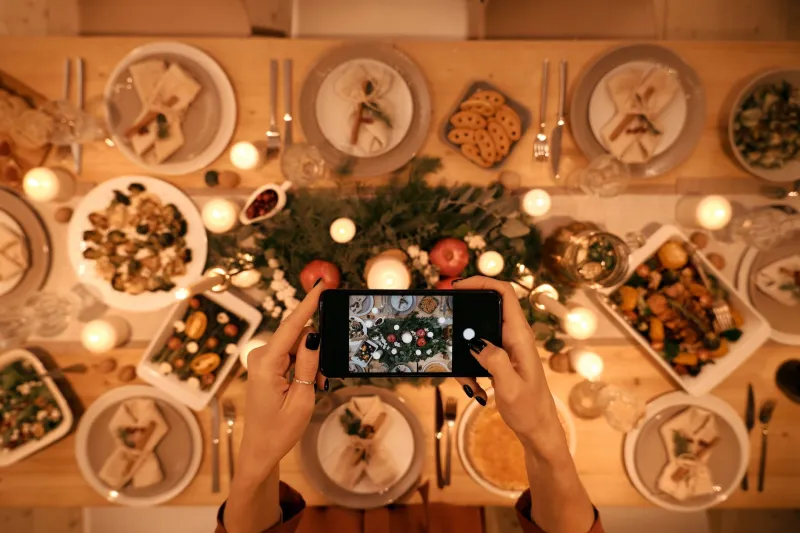
You're at your nephew's birthday party. The cake comes out, candles lit, the whole family crowded around a five-year-old trying to blow them all out in one go. And before the candles are even out, someone's already got their phone up, already composing the caption, already thinking about who's going to see this.
Sound familiar? For most Americans, it's basically the default now. But there's something quietly worth examining in that reflex — the pull to share immediately, before the moment has even finished happening. Because live sharing and delayed sharing are genuinely different things, and the gap between them affects more than just your Instagram feed.
What Real-Time Sharing Actually Does to You
The neuroscience here is more interesting than you might expect. When you photograph something with the intention of immediately sharing it, your brain shifts into a broadcast mode — you're not just experiencing the thing, you're simultaneously producing content about it. That split attention is real, and it has consequences.
Research has consistently shown that the act of photographing something with the intent to share it can actually reduce how well you remember the experience itself. The brain partially offloads the memory work to the device, essentially deciding it doesn't need to encode the moment as deeply because the photo will handle it. When the sharing is immediate and social, that effect can be even more pronounced — you're not just documenting, you're performing.
This isn't an argument against photography. It's an argument for being honest about what you're doing when you pull out your phone at a wedding, a graduation, or a kid's first steps and immediately broadcast it to your followers.
The Pressure to Document in Real Time
There's also a social dimension to this that doesn't get talked about enough. Real-time sharing carries an implicit pressure — to be there, to be present at events in a way that's visible to people who aren't there. If you were at the Taylor Swift concert and didn't post anything until a week later, some people would genuinely wonder if you actually went.
That pressure shapes behavior in ways that aren't always healthy. People angle themselves for better shots instead of better views. They repeat moments — "do it again so I can get a video" — in ways that hollow out the spontaneity. They check like counts mid-event. The experience becomes, at least partially, a production.
For families especially, this can create a strange dynamic. The parent who spent the entire school play looking through a phone screen technically has footage of the performance. But they weren't really there in the way that matters. The footage exists; the presence doesn't.
What Delayed Sharing Restores
Here's where it gets interesting: uploading photos after the fact — even just a day or two later — fundamentally changes the relationship between you and the images.
When you sit down to upload and share photos from an event that's already over, you're no longer in broadcast mode. You're in curation mode. You look at 47 photos from the birthday party and pick the three that actually capture something real. You write a caption that reflects on the day rather than narrating it as it happens. You notice things in the photos that you missed in the moment — the expression on your dad's face, the way the light hit the backyard.
Delayed sharing also tends to produce a better personal archive. When you're uploading with a little distance, you're making more intentional decisions about what's worth keeping and what's digital clutter. Platforms like PictureUpload are built around this idea — giving you a place to store and organize photos thoughtfully, not just dump and broadcast.
The result is a collection that actually means something when you look back at it, rather than a feed of reflexive moments that blur together.
The Case for a Personal "Cooling Off" Period
Some photographers — amateur and professional alike — have started building in what they call a cooling-off period before sharing. The rule is simple: don't upload or share anything until at least 24 hours after the event. Some stretch it to a week.
The benefits are practical as well as psychological. You have time to actually review your photos and choose the best ones. You can add context, location tags, or notes that make the images more meaningful. You're less likely to share something you'll later regret — an unflattering photo of someone, an image with personal information visible in the background, or just a mediocre shot that seemed exciting in the moment.
For family archives specifically, the cooling-off approach pays real dividends over time. A photo library built from deliberate, curated uploads tells a more coherent story than one assembled from thousands of immediate, unconsidered shares. When your kids are adults and looking back through family photos, they'll see the moments that actually mattered — not every fleeting second that someone reflexively documented.
Finding the Balance
None of this means real-time sharing is always wrong. Sometimes immediacy is the whole point — breaking news, a surprise announcement, a spontaneous moment that loses its meaning if you wait. There are absolutely situations where sharing live makes sense.
But those situations are probably rarer than your current habits suggest. Most of the moments worth photographing are also worth being fully present for — and the photo will be just as good, or better, if you upload it tomorrow.
The question worth asking, next time your phone comes out mid-moment, is a simple one: Am I doing this for the memory, or for the audience? The honest answer will tell you a lot about whether you should be posting live or posting later.
Your future self, scrolling through a well-organized photo archive years from now, will probably thank you for waiting.